

Understanding Osteoporosis: Why Bone Strength Matters More Than You Think
Osteoporosis is often called a “silent condition” because bone loss occurs gradually, often without symptoms until a fracture happens.
However, the research is clear — osteoporosis is a major global health issue, and its impact is increasing as populations age.
Globally, osteoporosis affects around 10% of the population, and up to 30% of postmenopausal women (Ozmen et al, 2024). In Australia alone, over 1 million people are affected, with poor bone health contributing to more than 183,000 fractures per year (Healthy Bones Australia, 2026).
Understanding how and why this occurs is key to preventing long-term decline.
What is Osteoporosis?
Osteoporosis is characterised by:
• Reduced bone mineral density (BMD)
• Deterioration of bone structure
• Increased fragility and fracture risk
As bone becomes less dense, it also becomes more porous — meaning even low-impact events, such as a fall from standing height, can result in fractures.
- Common fracture sites include:
- Hip
- Spine
- Wrist
These injuries are strongly associated with reduced independence and long-term disability.
(AIHW, 2026)
Bone Density Declines with Age
Bone is a dynamic tissue that is constantly being broken down and rebuilt.
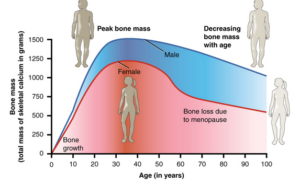
- Peak bone mass occurs in early adulthood
- From around 35 years onwards, bone breakdown exceeds formation
- Bone density declines progressively with age
- This decline accelerates later in life, particularly due to hormonal changes and reduced physical loading.
Bone density peaks early in life and declines with age — increasing fracture risk over time.
(AIHW, 2026)
Osteoporosis is a Growing Health Burden
Osteoporosis is not just a bone condition — it is a major contributor to disease burden.
- Data shows:
- The burden of disease related to low bone density has nearly doubled over the past 30 years (Shen et al, 2022)
- Around 1 in 3 women and 1 in 5 men over 50 will experience an osteoporotic fracture (International Osteoporosis Foundation, 2026)
These figures highlight that osteoporosis is a significant contributor to disability and healthcare demand.
Risk Factors for Osteoporosis
Osteoporosis develops due to a combination of factors.
Non-modifiable:
- Age
- Female sex
- Genetics
- Hormonal changes (e.g. menopause)
Modifiable:
- Low physical activity
- Poor nutrition (calcium/vitamin D deficiency)
- Smoking
- Excess alcohol
- Low body weight
- Certain medications
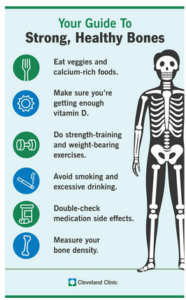
Research shows that lifestyle factors — particularly exercise and nutrition — play a significant role in bone health and disease progression.
(AIHW, 2026)
(Li et al, 2023)
Why Strength and Movement Matter
Bone responds to the loads placed on it.
- Without sufficient loading:
- Bone density declines faster
- Muscle strength decrease
- Falls risk increases
- With appropriate loading:
- Bone formation is stimulated
- Strength improves
- Fracture risk is reduced
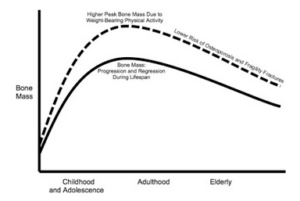
This relationship highlights why exercise is one of the most effective tools for maintaining bone health.
(Li et al, 2023)
Exercise Can Slow Bone Loss
Research consistently shows that weight-bearing and resistance training can:
• Maintain or improve bone density
• Increase muscle strength
• Reduce falls risk
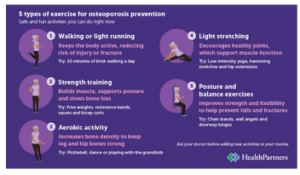
Targeted exercise can slow bone loss and improve overall physical function.
(AIHW, 2026)
Falls + Fractures = The Real Risk
Osteoporosis alone doesn’t cause symptoms — fractures do.
And fractures often occur due to falls, not just bone weakness.
Research shows a strong relationship between:
- Reduced strength
- Poor balance
- Increased fracture riskThis is why management must go beyond bone density alone. It requires improving:
(Li et al, 2023)
Support for Older Adults at Pontifex Physiotherapy
At Pontifex Physiotherapy, we take a proactive approach to bone health and fracture prevention.
- Our Senior Screening assessments help identify early risk factors such as:
- Reduced strength
- Poor balance
- Limited mobility
- From here, our Strength and Conditioning programs focus on:
- Safe resistance training
- Weight-bearing exercise
- Balance and falls prevention
- Long-term progression
These programs align with current research showing that structured exercise is essential for maintaining bone and physical capacity with age.
It’s Never Too Early — or Too Late
Bone health is influenced across the entire lifespan:
- Early life → build bone density
- Adulthood → maintain
- Later life → slow decline and prevent fractures
Even in older adults, targeted exercise can:
- Improve strength
- Reduce falls risk
- Support independence
Take Home Message
Osteoporosis is common — but it is not inevitable.
Research clearly shows that:
- Bone density declines with age
- Fracture risk increases significantly over time
- Exercise plays a critical role in prevention and management
Maintaining strength, mobility and bone health requires consistent effort and structured training.
If you would like support managing bone health or reducing your risk of falls and fractures, speak to our team about our Senior Screening and Strength & Conditioning programs.
(AIHW, 2026)
About Osteoporosis – Healthy Bones Australia (2024) Healthy Bones Australia. Available at: https://healthybonesaustralia.org.au/your-bone-health/about-osteoporosis/?utm_source=chatgpt.com.
Australian Institute of Health and Welfare (2026) Osteoporosis and minimal trauma fractures, Australian Institute of Health and Welfare. Available at: https://www.aihw.gov.au/reports/chronic-musculoskeletal-conditions/osteoporosis.
Epidemiology of osteoporosis and fragility fractures | International Osteoporosis Foundation (2024) Osteoporosis.foundation. Available at: https://www.osteoporosis.foundation/facts-statistics/epidemiology-of-osteoporosis-and-fragility-fractures?utm_source=chatgpt.com.
Li, H. et al. (2023) ‘Risk factors of osteoporosis in elderly inpatients: A cross-sectional single-centre study.’, 4, pp. 1126172–1126172. Available at: https://doi.org/10.3389/fragi.2023.1126172.
Samican Özmen et al. (2024) ‘Prevalence and Risk Factors of Osteoporosis: A Cross-Sectional Study in a Tertiary Center’, Medicina, 60(12), pp. 2109–2109. Available at: https://doi.org/10.3390/medicina60122109.
Shen, Y. et al. (2022) ‘The Global Burden of Osteoporosis, Low Bone Mass, and Its Related Fracture in 204 Countries and Territories, 1990-2019’, Frontiers in Endocrinology, 13(13). Available at: https://doi.org/10.3389/fendo.2022.882241.




🌎 Happy World Physiotherapy Day! 🩵
Today we’re celebrating physiotherapy and the difference it can make at every stage of life.
From recovering from an injury and returning to sport, to building strength, managing pain and staying active as we age — physiotherapy is about helping people move better, feel stronger and get back to doing what they love.
We’re incredibly proud of our team at Pontifex Physiotherapy and the care, knowledge and passion we bring to every patient.
We genuinely love what we do as physios — getting to work with people, support their recovery, celebrate their progress and help them achieve the things that matter most to them.
A big thank you to all of our patients for trusting us with your health, recovery and goals. 🩵
Happy World Physiotherapy Day! ... See MoreSee Less
0 CommentsComment on Facebook
Thanks to all of our wonderful patients, we are once again finalists in the Sutherland Shire local business awards. 💙
We are so grateful for your continued support and trust in our team! 💙 ... See MoreSee Less
0 CommentsComment on Facebook
TODAY IS THE FINAL DAY TO VOTE IN THE SUTHERLAND SHIRE BUSINESS AWARDS!!
Please click the link to vote for us!
thebusinessawards.com.au/40681/pontifex-physiotherapy-and-performance ... See MoreSee Less
0 CommentsComment on Facebook